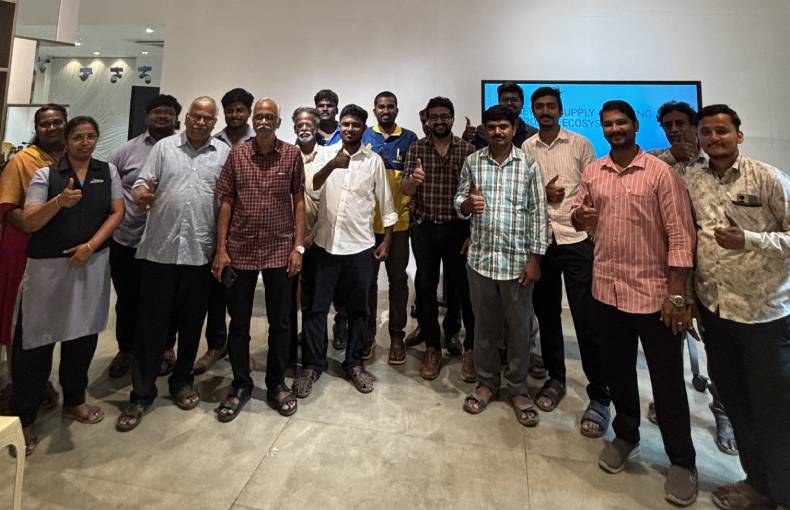
EBCO Dealer Meet April 2026: Building a Strong Ecosystem for Growth at Senbaga Life Spaces
There’s a shift happening in the market.
And it’s not subtle anymore.
Customers today don’t just walk in and buy.
They research, compare, ask, hesitate… and often delay decisions longer than before.
More choices haven’t made things easier — they’ve made them more confusing.
And somewhere in between all of this, dealers are expected to compete, convince, and close.
Alone.
The recent EBCO Dealer Meet – SENBAGA Ecosystem Initiative was built around a simple but important idea:
What if dealers didn’t have to operate alone?
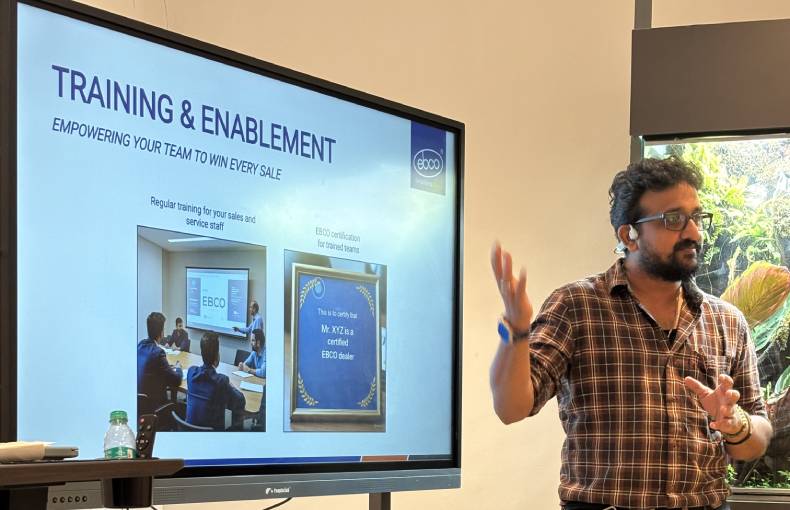
What the session was really about
At first glance, it looked like a standard dealer interaction.
But the conversation quickly moved away from products…
and into something much deeper — how the market itself is changing.
Because the gap today isn’t supply.
It’s structure.
Awareness is high.
Inputs are everywhere — online, offline, references, advice.
But decisions? Still unclear.
That’s where the idea of an ecosystem begins to make sense.
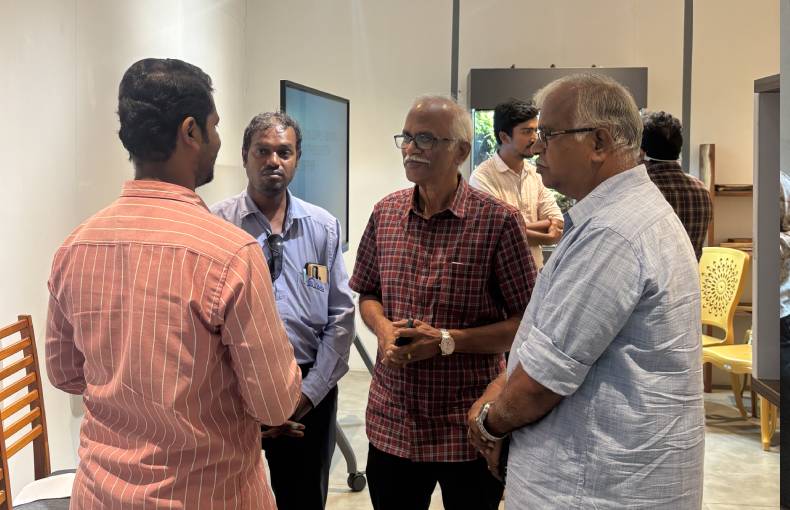
The SENBAGA Ecosystem: Not a concept, but a working model
One of the core discussions in the session was around building a structured flow:
Customer → Senbaga → Dealer → Carpenter → Execution
At first, it sounds simple.
But think about what this actually solves.
- Customers get clarity before making a decision
- Dealers receive customers who already trust the solution
- Carpenters work with aligned expectations
- Execution becomes smoother
This isn’t just coordination.
It’s alignment.
And that changes outcomes.
The role of Senbaga Life Spaces
Prakash’s message to dealers made this very clear.
Senbaga isn’t trying to replace the dealer.
It’s trying to strengthen the dealer’s position.
- Creating an experience center for customers
- Helping explain complete solutions
- Building trust before purchase
- Routing customers back to dealers for execution
That last part matters.
Because in a market where price-based competition is common,
trust becomes the real differentiator.
And trust rarely builds in a single transaction.
From competition to collaboration
One of the more honest conversations during the meet was around how unstructured competition is affecting dealers.
When everyone competes on price:
- Margins shrink
- Value perception drops
- Long-term growth becomes unstable
The ecosystem approach challenges that.
Instead of:
👉 Competing for the same customer
It becomes:
👉 Collaborating within a structured system
And that’s a very different mindset.
Where EBCO fits into all of this
EBCO’s role isn’t just product supply.
It’s enablement.
Through initiatives like the Power Partners Program, the focus is on:
- Better visibility
- Training and certification
- Carpenter engagement
- Rewards and recognition
- Structured dealer growth
Because growth doesn’t happen just by selling more.
It happens when:
- Teams understand products better
- Carpenters are aligned
- Customers trust the recommendation
The overlooked influence: Carpenters
This came up strongly during the session.
Carpenters influence a large percentage of final decisions.
Yet, in many systems, they’re treated as an afterthought.
The ecosystem flips that.
- Engage carpenters
- Train them
- Align them with the brand
Because when carpenters are aligned,
orders are no longer uncertain — they’re expected.
Why this model works
There was a simple but powerful line in the discussion:
“EBCO gives tools. Senbaga gives conversion.”
And together?
👉 Predictable growth.
Not random sales spikes.
Not inconsistent performance.
But something far more valuable — stability.
What dealers walked away with
Not a product list.
Not a sales pitch.
But clarity.
- A clearer understanding of structured growth
- A system that protects dealer interests
- A way to move beyond price-based competition
- A stronger connection between brand, dealer, and execution
And most importantly…
A sense that they are part of something larger than individual transactions.
Looking ahead
This wasn’t positioned as a one-time event.
And it shouldn’t be.
Because ecosystems aren’t built in a single meeting.
They’re built through:
- Repeated interactions
- Continuous alignment
- Ongoing engagement
Dealer meets. Carpenter meets. On-ground activation.
Step by step.
A small but important shift
If there’s one idea worth taking away from this meet, it’s this:
Programs help you grow.
Ecosystems help you survive.
And in a market that’s only getting more complex…
That distinction matters.
Final thought
The quality of a business today isn’t defined only by what it sells.
It’s defined by the system it operates within.
And when that system is built on clarity, trust, and alignment…
Growth doesn’t feel forced.
It feels natural.